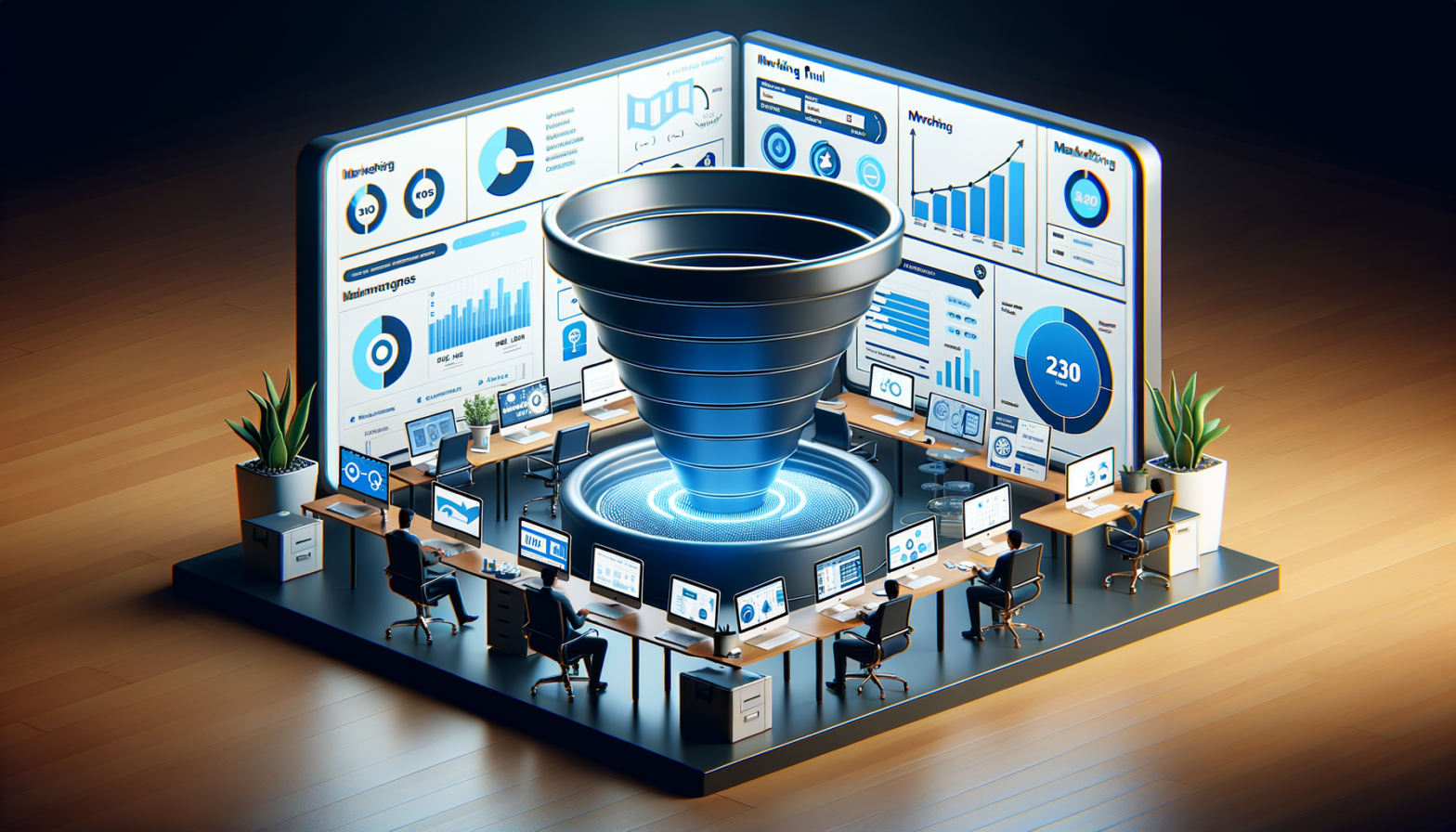
Understanding the Marketing Funnel Strategy
Marketing funnel, also known as a sales funnel, is a crucial concept in marketing that represents the journey a customer takes from being aware of a product or service to making a purchase. It consists of different stages designed to guide potential customers through the buying process.
Key Stages of a Marketing Funnel
1. Awareness: This is the top of the funnel where customers become aware of your brand or product through various marketing efforts.
2. Interest: In this stage, customers show interest in your offering and start to learn more about it.
3. Consideration: Customers evaluate your product or service against competitors and consider making a purchase.
4. Intent: At this stage, customers are ready to make a purchase decision.
5. Purchase: The final stage where customers convert and make a purchase.
Creating an Effective Marketing Funnel
Building a successful marketing funnel requires a strategic approach and continuous optimization. Here are some key tips for creating an effective marketing funnel:
- Define your target audience and understand their needs
- Develop compelling and relevant content for each stage of the funnel
- Use multiple channels to reach customers at different touchpoints
- Monitor and analyze the performance of your funnel to make data-driven decisions
- Optimize the funnel based on customer feedback and behavior
Real-World Case Studies
Case Study 1: Neha’s E-commerce Store
Problem: Neha struggled to drive traffic to her e-commerce store and convert visitors into customers.
Solution: By implementing a comprehensive marketing funnel strategy, Neha focused on personalized email campaigns and social media ads.
Result: Neha saw a significant increase in website traffic and a boost in sales conversion rates.
Case Study 2: Arjun’s SaaS Startup
Problem: Arjun faced challenges in onboarding new users and retaining them for the long term.
Solution: Arjun revamped his onboarding process and introduced targeted tutorials and in-app messaging.
Result: Arjun saw a reduction in churn rate and an increase in customer lifetime value.
Case Study 3: Meera’s Consulting Agency
Problem: Meera struggled to generate qualified leads for her consulting services.
Solution: Meera implemented a lead funnel strategy that included offering free resources and hosting webinars.
Result: Meera saw a boost in lead generation and an improvement in the quality of leads.
Case Study 4: Rahul’s Digital Marketing Agency
Problem: Rahul faced difficulty in converting leads into paying clients for his digital marketing services.
Solution: Rahul developed a conversion funnel that focused on building trust through case studies and client testimonials.
Result: Rahul experienced an increase in client conversion rates and client retention.
If you want to understand the Marketing Funnel Strategy you can connect with me
FAQ
To optimize your marketing funnel, analyze customer data, test different strategies, and continuously refine your approach based on insights.
Avoid neglecting the importance of customer personas, failing to align marketing and sales teams, and not monitoring key performance metrics.
Track key performance indicators such as conversion rates, customer acquisition cost, and customer lifetime value to measure the effectiveness of your marketing funnel.
Consider using marketing automation tools, CRM systems, analytics platforms, and A/B testing tools to optimize your marketing funnel.
Personalization plays a crucial role in a marketing funnel as it helps tailor content and messaging to individual customer preferences, increasing engagement and conversions.